by Donna Steward, Guest Author
| Three of the four gospels contain Jesus’ teaching of the Parable of the Sower (Matthew 13:1-9, Mark 4:1-9, Luke 8:4-8). Parables are stories of ordinary life used as illustrations to teach a more profound spiritual truth — a simple story illustrating a moral or religious lesson to the listeners. All prosperous and populated cities surrounded the Sea of Galilee, and many of the famous and influential stories about Jesus’s life occurred around the lake, if not on it. The Parable of the Sower is one Jesus shared while He sat in a boat just off the shore of the Sea of Galilee. Let us prayerfully consider His teaching. “And he told them many things in parables, saying: ‘A sower went out to sow. And as he sowed, some seeds fell along the path, and the birds came and devoured them. Other seeds fell on rocky ground, where they did not have much soil, and immediately they sprang up, since they had no depth of soil, but when the sun rose they were scorched. And since they had no root, they withered away. Other seeds fell among thorns, and the thorns grew up and choked them. Other seeds fell on good soil and produced grain, some a hundredfold, some sixty, some thirty’” (Matthew 13:3-8 English Standard Version). Let’s look at the meanings of some of the words within the Parable. The sower — the Son of Man Jesus had many titles, including “Messiah,” “Prince of Peace,” “Teacher,” “Son of God,” “Son of Man,” and “Son of David.” But the one that Jesus himself used most often was “Son of Man.” This term is used by Jesus 80 times to refer to himself. The field — the world Luke 8 and Matthew 13 describe four types of soil — hard path, rocky soil, thorny soil, and good soil. Each soil could produce a plant of some sort except the hard path. The seed — the Word of God Jesus says the seed is “the word of the kingdom” (Matt.13:19 King James Version). He plants the Word in our hearts. The Word is the truth, the knowledge of God, and the gospel. The soil — the human heart God created our hearts. When His Word is planted in our hearts, it brings forth fruit. Just as a seed has to remain in the ground over time to germinate, so the Word of God has to abide in our hearts for a while to produce fruit. |
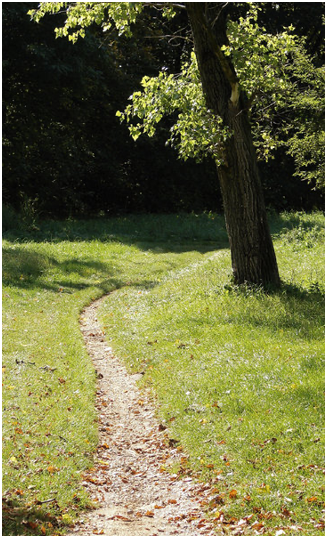 |
| The hard soil — a hard heart A path is where many people have walked, and the dirt there is well worn. The more people walk on a path, the harder the ground becomes. The seed falling on the hard path could not sink into the dirt. It cannot penetrate the soil (the heart); it is too hard. Birds came and ate the seed. Some people hear the truth but do not understand and, like a hardened path, they do not let it sink into their hearts (see Zechariah 7:12). Soon Satan takes the truth away. (In the Bible, birds are sometimes a picture of Satan.) Why do hearts get hard? It could be a lack of ability to perceive, remember, or grasp events or ideas coming from God, insensitivity to sin, or just sinfulness. The path gets hard when one does not follow God’s commands or because of arrogance and pride. A person could be easily offended, resentful, unforgiving, or just indifferent to the Word of God. Then the evil one will steal the opportunity for the seed to grow. |
| The rocky ground — a superficial heart It is possible for things to grow on the rocks, but usually these plants don’t live long. In rocky places, the hard rocks block the roots from growing strong. Any seed growing in the thin soil soon withers in the intense heat and dies. These people hear the message with great joy, but, like seeds on rocky soil, they do not let it take root. They seem happy to hear about Jesus and His great love, but do not let it sink into their hearts. On the outside, they may express great enthusiasm, but inwardly they do not think and meditate on the Word. These people quickly forget about God’s Word when they face pressure or dire circumstances. They don’t let the Word discipline their thoughts and actions. They don’t grow strong roots of godly discipline and life goes by the wayside. The root — a transformed thought process Our root is our foundation. Plants continuously grow from a tiny seed to a sapling and then fully mature. The root is the part that holds the plant tightly, absorbs water and minerals from the soil (the heart), and even stores food. For example, trees are deeply rooted pillars of strength, often surviving storms and natural disasters. “They will be like a tree planted by the water that sends out its roots by the stream. It does not fear when heat comes; its leaves are always green. It has no worries in a year of drought and never fails to bear fruit” (Jeremiah 17:8 New International Version). The thought process is the root. Humans never stop growing; they are constantly absorbing new information and knowledge, which affect their thoughts. We should discipline our minds and actions when we think about the Word of God. When thoughts are not concentrated on the love of God’s Word and translated into godly disciplines, the Word cannot take root in the heart. Simply stated, renewing your mind, according to Romans 12:2, means interpreting life through God’s Word and the inspiration of the Holy Spirit rather than through the lens of your experience, sinful behavior, trauma, preferences, or the opinions of others. In other words, you can discard any thought that doesn’t align with the Word and replace it with the truth. This brings your will into agreement with the Father’s will. As you fill your mind with His Word by reading, meditating, memorizing Scripture, praying, and singing, His ways become yours. These disciplines train our thoughts to be like more like His when trials and heartache come. We can make corrections to keep our lives on the right path. “Then Christ will make his home in your hearts as you trust in him. Your roots will grow down into God’s love and keep you strong” (Ephesians 3:17 New Living Translation). |
| The seed among the weeds — the society Weeds are powerful and forceful. Wherever there are weeds, they take over the good plants. The strong roots of the weeds use up all the nutrients in the soil (the heart), leaving the plants without nourishment. These plants barely grow at all; they don’t produce fruit. Some people hear God’s Word and start to grow and bear fruit, but soon they become worried about the problems of daily living. They may think that if they only had more money and more “things,” they would be happy. These wrong beliefs take up much of the person’s time and energy, just like the weeds steal all the nutrients from the good plants. This mindset is not one focused on living for God; it is focused on society, and it does not produce any spiritual fruit. 1 Corinthians 15:33 states, “Be not deceived: evil communications corrupt good manners” (KJV). The ESV renders it this way, “Do not be deceived: ‘Bad company ruins good morals.’” The New Living Translation says, “Don’t be fooled by those who say such things, for ‘bad company corrupts good character.’” The problem is the soil (the heart). Worries, greed, and social contacts have diverted attention so one cannot be transformed. Persecution, false religion, and worldliness are the three ways the thorns choke out the good seed. The enemy — The devil The devil, also referred to as Satan, is best known as the personification of evil and the downfall of good people everywhere. The devil is the one who snatches the seed, the one who helps people ignore the seed, and the one who chokes out the seed with the world’s cares. |
 |
| The good seed — a receptive heart It represents the people who hear God’s Word and believe it. They put their trust in Jesus. Their hearts receive the kingdom’s message, and the seed takes root. Some seeds produce lots of fruit, and some produce little. When you plant seeds (the Word of God) into the ground (the heart), the message of the kingdom will grow gradually. A planted seed doesn’t produce a plant the next day. Proper growth takes time. “This is the one who produces a crop, yielding a hundred, sixty or thirty times what from the seeds that were sown” (Matthew 13:23 NIV). The Word (Jesus) produces the crop. The harvest — a new Christian The harvest carries spiritual significance. It is the result of God’s work in the hearts of men. We are co-workers with God in his kingdom. We help spread the Gospel message, and God will add to the increase. In Romans 6:3-8, we learn that in baptism, the old self dies, and the new self comes into being. The old self is “buried with Christ through baptism into death” (Romans 6:4 NIV). Then the new self is born, through the Holy Spirit, to “walk in newness of life” (Romans 6:4 KJV). With the new nature comes an intense desire for Christ and the things of God. The good soil produces a new life. Jesus answered, “I tell you the truth, no one can enter the kingdom of God unless he is born of water and the Spirit. Flesh gives birth to flesh, but the Spirit gives birth to Spirit” (John 3:5-6 NIV). The Reapers — the angels Jesus describes the harvest as “the end of the age.” Jesus says that those who harvest the field, the reapers, will be His angels. In this parable, Jesus symbolically describes two groups — those gathered into the barn (good soil, good hearts) and those burned up. The barn represents the kingdom that He has been preaching about. The fire represents God’s judgment, sometimes compared to a harvest. Application The parable teaches us there are four kinds of soils (hearts). It is important for each of us to examine ourselves to know which best describes our hearts. * Is your heart hard? * Is it superficial? * Is your heart worried about the problems of daily living? * Or do you have a receptive heart? If we believe our hearts are not what God desires, let us consider this passage. “’Yet even now,’ declares the LORD, ‘return to me with all your heart, with fasting, with weeping, and with mourning; and rend your hearts and not your garments.’ Return to the LORD your God, for he is gracious and merciful, slow to anger, and abounding in steadfast love; . . . “ (Joel 2:12-13 ESV). |
| Who is Jesus and what does it mean to follow him? Click here to read. If you have questions, just send an email to NLBIministry@gmail.com. SCRIPTURE QUOTATIONS Scripture quotations marked ESV are from the ESV® Bible (The Holy Bible, English Standard Version®), copyright © 2001 by Crossway, a publishing ministry of Good News Publishers. Used by permission. All rights reserved. Scripture quotations marked KJV are from the King James Version. Scripture quotations marked NIV are taken from the Holy Bible, New International Version®, NIV®. Copyright © 1973, 1978, 1984, 2011 by Biblica, Inc.® Used by permission. All rights reserved worldwide. Scripture quotations marked NLT are taken from the Holy Bible, New Living Translation, copyright © 1996, 2004, 2007, 2013, 2015 by Tyndale House Foundation. Used by permission of Tyndale House Publishers, Carol Stream, Illinois 60188. All rights reserved. |
 Women of Worth Worldwide